Think of the last time someone told you to calm down. Did it work? Almost never. It tends to do the opposite, because the instruction arrives from outside and your body had not asked for it. Calm is not something you can order. It is something that turns up once the body has decided, in its own quiet way, that it is safe to stop watching the door.
The body is not persuaded by arguments
You can know perfectly well that the email is not an emergency. Your chest can still be tight. Knowing happens in one part of you and bracing happens in another, and the second part listens to different evidence: the rhythm of your breath, the sounds around you, what your eyes are taking in, how your muscles are held.
That is oddly good news. If the body responds to evidence, then you can offer it evidence. Not a speech. Small, physical, believable things.
Where we start in the course
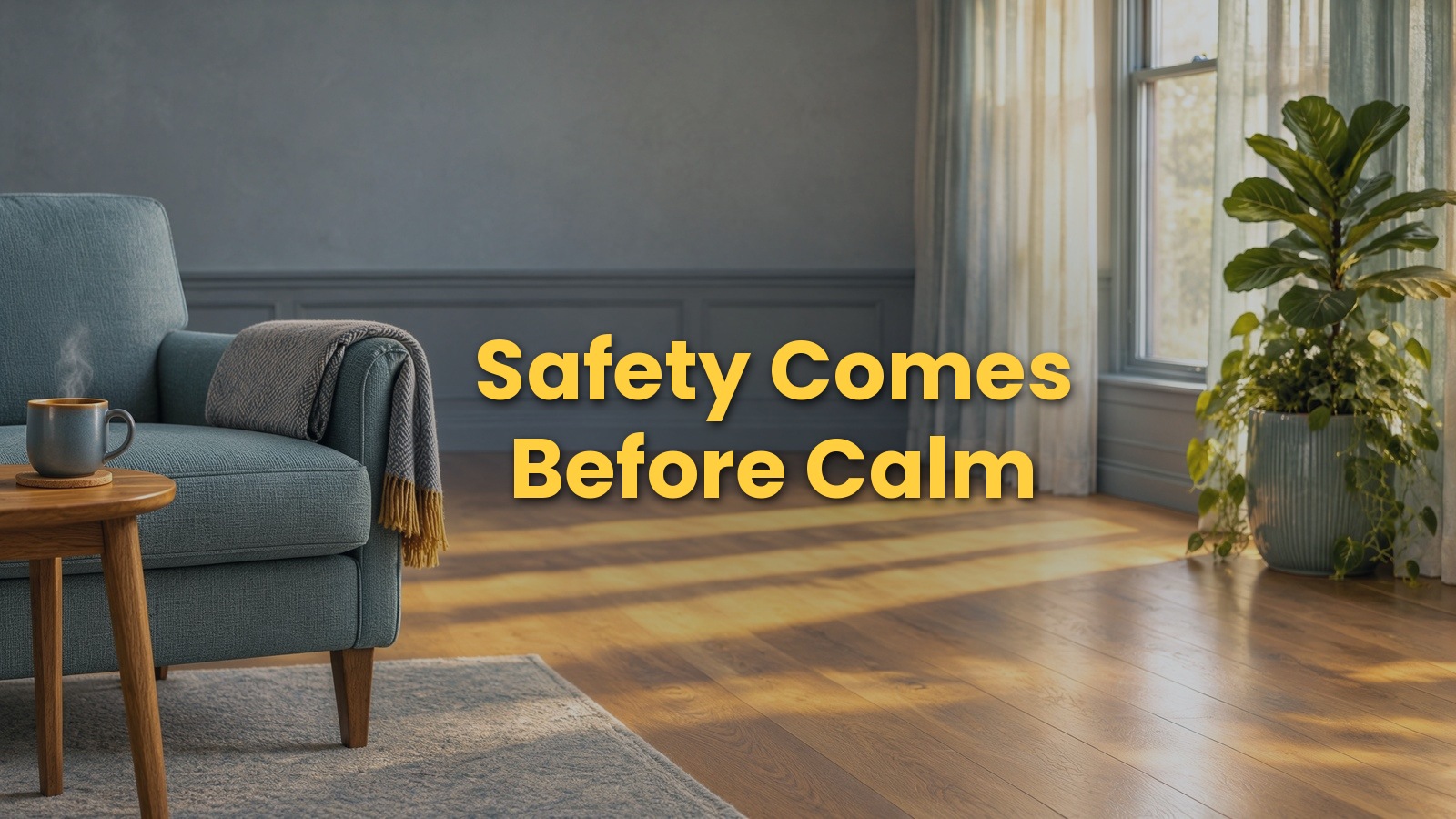
This is the thinking behind our new members course, Nervous System Regulation & Somatic Healing. We begin with something very plain, which is looking around the room you are actually in and letting your eyes land on whatever is pleasant. It sounds almost too simple to count. Yet it tells the body that the environment has been checked and nothing is wrong, and that is often where the loosening begins.
From there the course notices small moments of ease, which some people call glimmers. It moves to humming on a long out-breath, and to breathing at a slow, even pace. Later on it gets into movement, shaking and settling, and into ending the working day on purpose so that you do not carry it home on your shoulders.
Nothing dramatic
I want to be honest about how this feels. It is rarely dramatic. Most of the time you finish a practice and the only difference is that your jaw has dropped a little, or you notice you have been breathing lower down. People often dismiss that and move on. I would ask you to stay with it for a moment. A body that has been braced for years does not let go all at once, and a small softening, repeated, is how it learns that letting go is allowed.
A word of care. The course is not therapy, and it is not a substitute for it. If you have lived through something frightening, or if your symptoms are heavy, please bring a trained professional into the picture. The practices are meant to keep you company, not to replace the help you may need.
The course has its own album, Safe Harbour, to play while you practise.
Comments (comments appear after approval)
No comments yet. Be the first to share your thoughts!